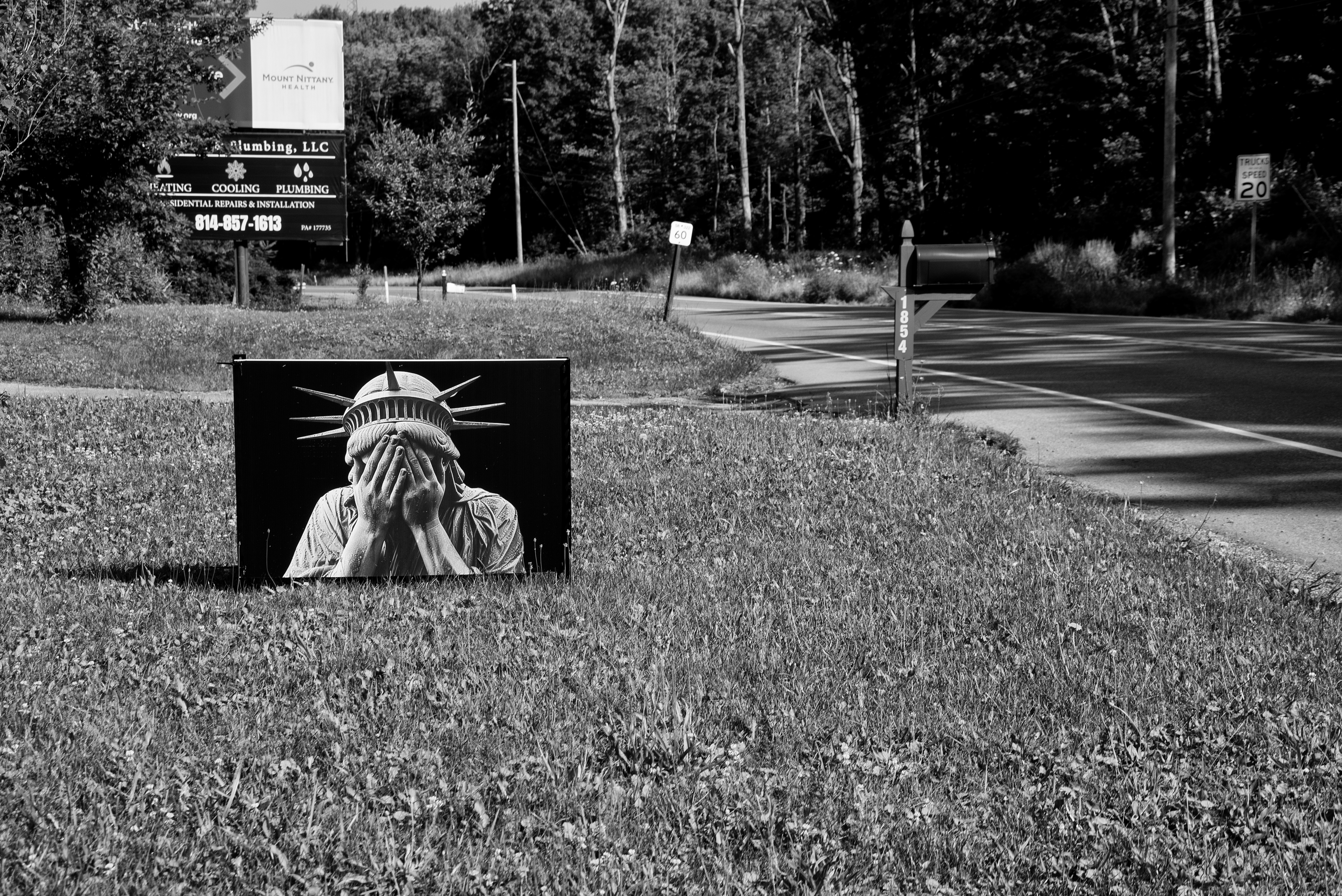
A sign is placed in the yard of a residential property off US Route 322 approaching the small town of Philipsburg in central Pennsylvania. The sign appears almost as if it is floating in the lush green grass. Greeting passersby entering this town of some 3,000 residents, it displays a weeping Statue of Liberty covering her face in shame and sorrow before Route 322 twists and curls through the heart of town.
Philipsburg is a town with a history built on timber, industry, and coal. Industry has disappeared, and it’s been decades since coal was a significant employer. Yet one employer has remained in Philipsburg: GEO Group, the second largest for-profit prison company in the US.
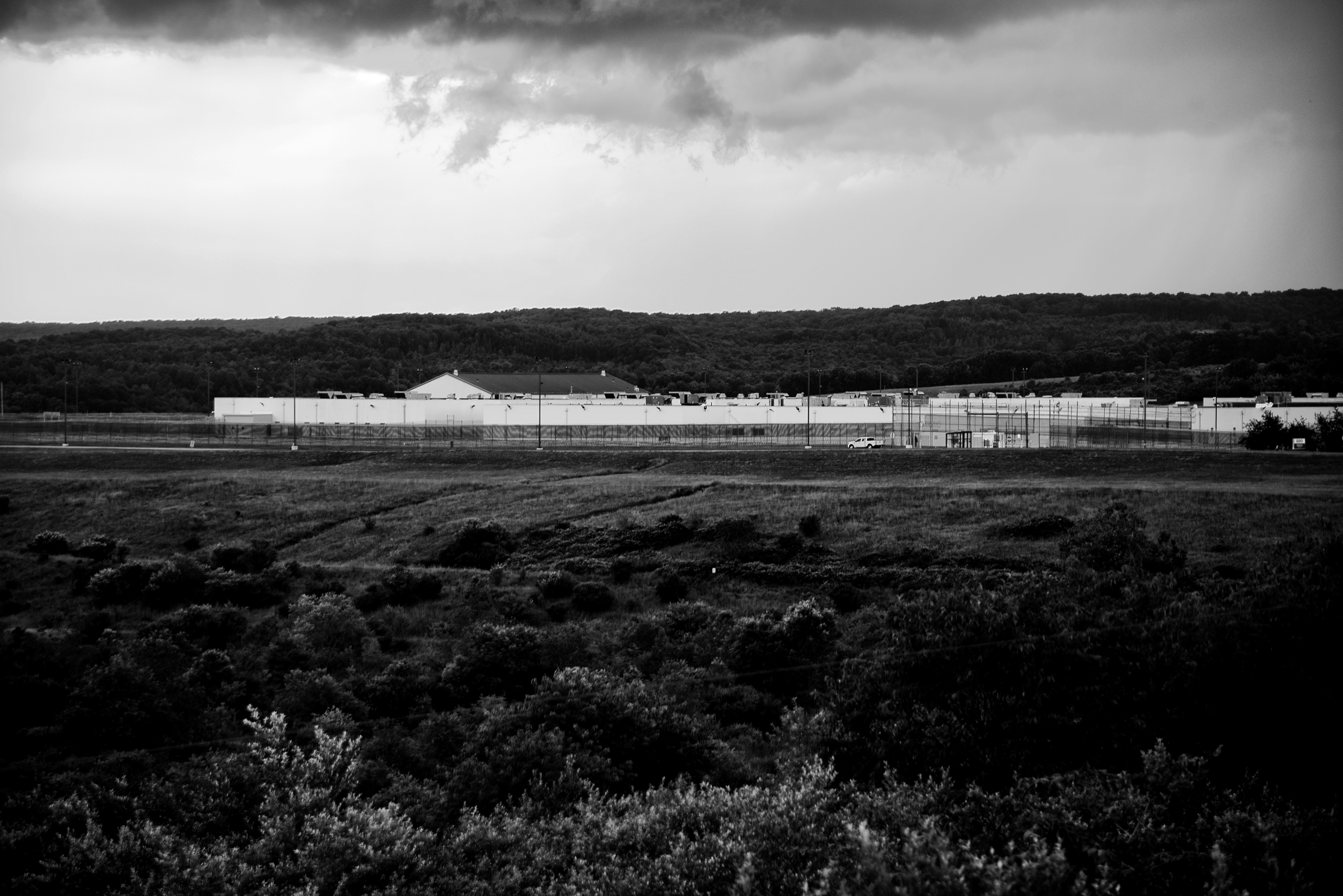
Eager to replace lost jobs, developers from the private prison company Cornell Corrections, and the state, believed the construction of a prison would fill this need. Built on the grounds of an old strip mine, Moshannon Valley Correctional Facility opened in 2006 and operated as a federal prison for fifteen years. Cornell was acquired by GEO Group in 2010, and in 2021, the prison temporarily closed only to reopen later that same year as an immigration detention center. ICE signed a 5-year agreement with Clearfield County. Clearfield County then signed a “management agreement” with the owner and operator of the prison, GEO Group. The prison was renamed the Moshannon Valley Processing Center (MVPC).
Buried away and completely hidden out of sight in a dense forest, more than 1,600 immigrants are imprisoned there on any given day in what is the largest immigration detention center in the northeast. Eighty-five percent of those detained in MVPC have no criminal record. In 2025, two immigrants died in ICE custody in MVPC, including 32-year-old Chaofeng Ge, found hanging by his neck in a shower stall on August 5.
In April, dozens of detainees launched a hunger strike to protest conditions. While anti-ICE and anti-detention advocates have sustained an active campaign to shut down the facility, many Philipsburg residents and local officials see things differently. An annual $200,000 administrative fee to Clearfield County for serving as the middleman in this pass-through of federal funds is one reason for keeping it open. The benefits of local tax revenue and jobs remain the other.
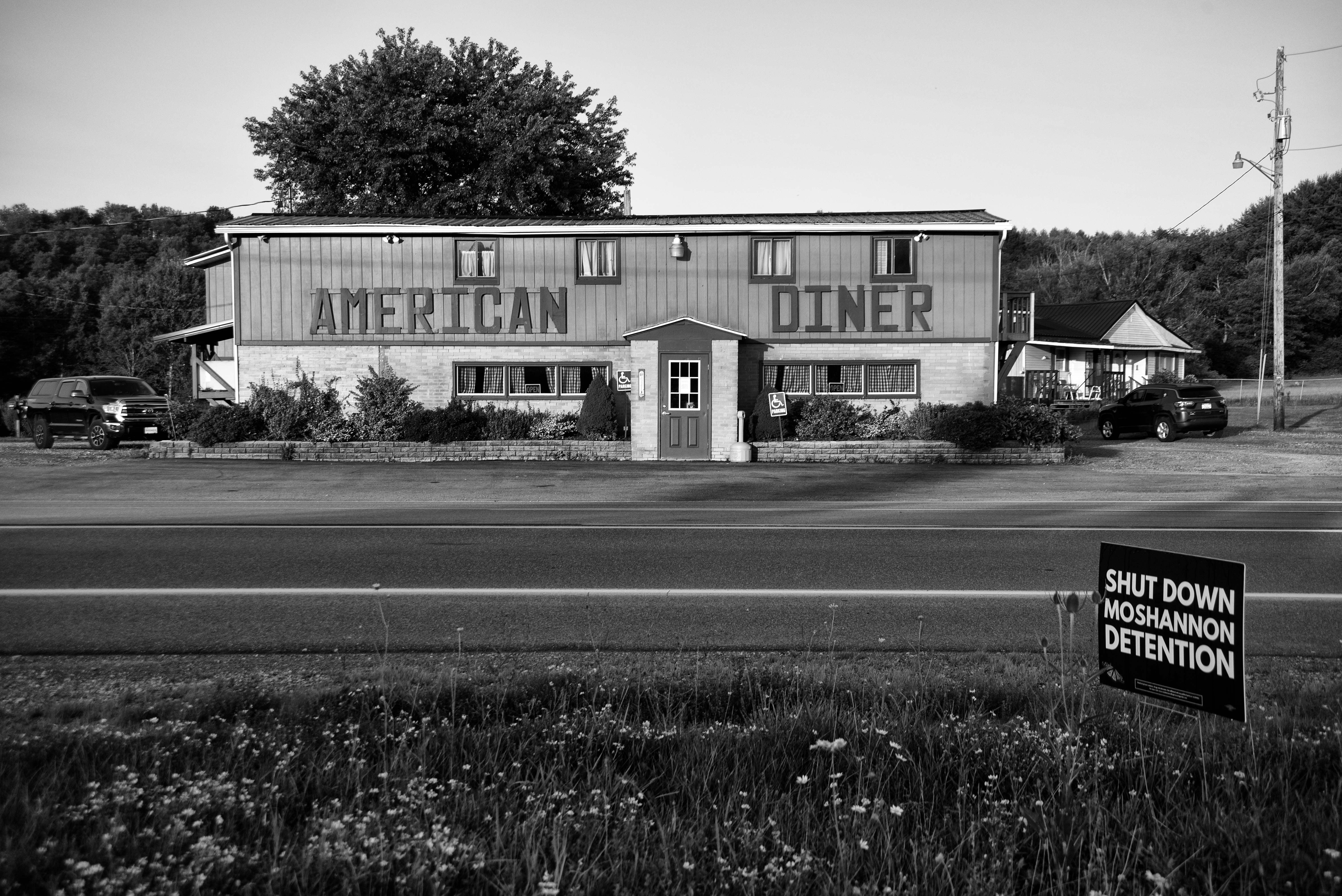
“I have no problem with the facility,” a local resident told me at a Knights of Columbus pancake breakfast one Sunday morning. “When jobs are lost, that place provides something for people here. If they don’t put immigrants here, they’ll find somewhere else. Keep the jobs here. I don’t have an issue with it.”
Outside its major urban centers—Philadelphia, Pittsburgh, Allentown, and the capital, Harrisburg—as well as the town of State College in Center County, home to Pennsylvania State University, Pennsylvania voters helped return Trump to office. Despite Democratic control of the governor’s office and House, rural counties have driven Pennsylvania to rank fifth nationally in 287(g) agreements, which allow local law enforcement to help carry out some ICE duties. Currently, 130 township and borough police departments, county and district attorney’s offices, constables and sheriffs statewide assist ICE. In 2026, nearly 5,500 immigrants have been arrested and detained in Pennsylvania. None of the state’s eight ICE detention facilities compare in size and function to MVPC. It incarcerates locals and out-of-state transfers in a system structured to sever and isolate immigrants from family, community, legal counsel, and due process. Moshannon has become a vital instrument in Trump’s mass deportation—rather, mass detention—machine.

It’s also a valuable piece of GEO Group’s “secure services” portfolio. Invoices obtained through open records requests show that from January 2025 to May of this year, GEO earned nearly $90 million in revenue from MVPC. As ICE retreats from using warehouses to expand detention capacity, it has spent more than $2.2 billion to directly purchase existing detention facilities from GEO Group’s competitor, CoreCivic. During a Q2 earnings call, GEO Group CEO George Zoley reported that the company was in an “active process” for the sale of several turn-key facilities. In late August, ICE published a solicitation to award contracts for “turn-key detention facilities” in four regions in the US, including central Pennsylvania. In early September, with the contract for MVPC set to expire at the end of the month, DHS requested a 6-month extension. Two weeks later, Clearfield County Commissioner approved the extension in a 2-1 vote.
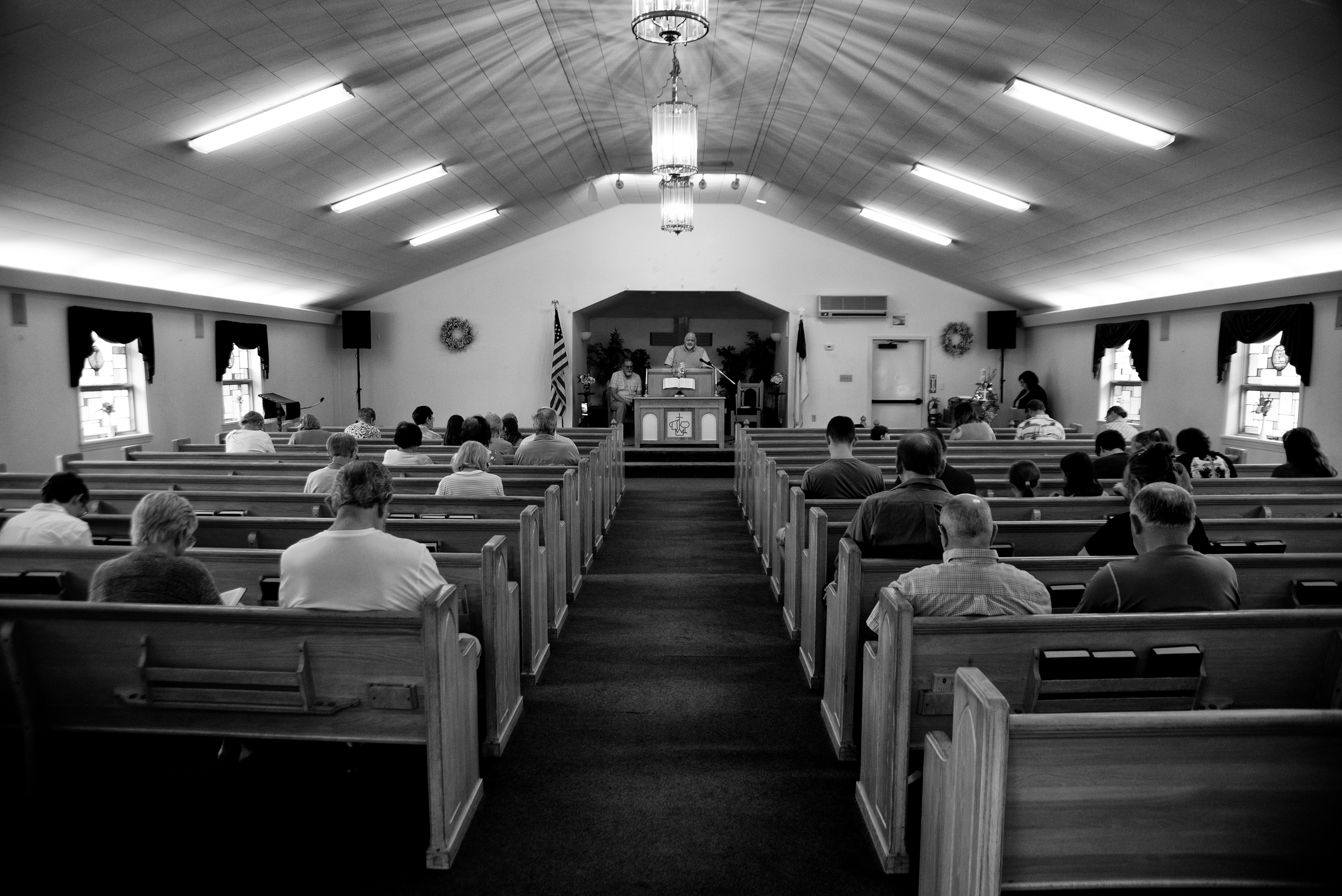

Activists like Timothy Smith, who chairs the Bill of Rights Defense Committee-Keystone State, anticipate based on these moves that DHS is either preparing to contract directly with GEO Group or outright purchase MVPC.
“This will give DHS and GEO more long-term stability and release both from the local risks and oversight that have strained the operation of MVPC. I truly think it will be an outright purchase,” Smith says. Both situations would enrich GEO Group shareholders while landing a financial blow to Clearfield County and Philipsburg. In both scenarios, immigrants and the pain, trauma, grief and loss experienced by their families—including US citizens—are both the raw materials and byproducts of profit-making maneuvers.
A mother sells everything and relocates to Maryland so she and her son can be closer to her husband. He’s languished in MVPC now for over 500 days. A father and his 18-year-old son, detained together during a routine check-in with ICE, put the pieces of their lives back together. ICE separated them. The father remained detained in Philadelphia. The teenager was transferred to MVPC. A woman in New York City struggles to find legal strategies to stop the deportation of her husband to eastern Europe. As we talk, he’s now in his eighth day in MVPC’s solitary confinement unit. A man sits alone in his studio apartment outside of Pittsburgh and confronts the “empty space” in his life. Faced with the reality of spending more months detained in Moshannon, his husband made the decision to self-deport.
Charlotte
Charlotte’s husband has been detained in Moshannon Valley Processing Center for over one and a half years. She was born in California; her husband is from Afghanistan and arrived in the US in 2016 on a valid student visa. They met in 2019, had a child together and got married in 2021. They lived in Illinois, where he received a REAL ID driver’s license and a work permit valid until 2029. In early 2025, while visiting family in Maryland, he was pulled over by a sheriff in West Virginia. No reason was provided for his arrest. He was transferred to ICE detention at Moshannon Valley Processing Center. To be closer to her husband in detention, Charlotte sold everything and moved to Maryland.
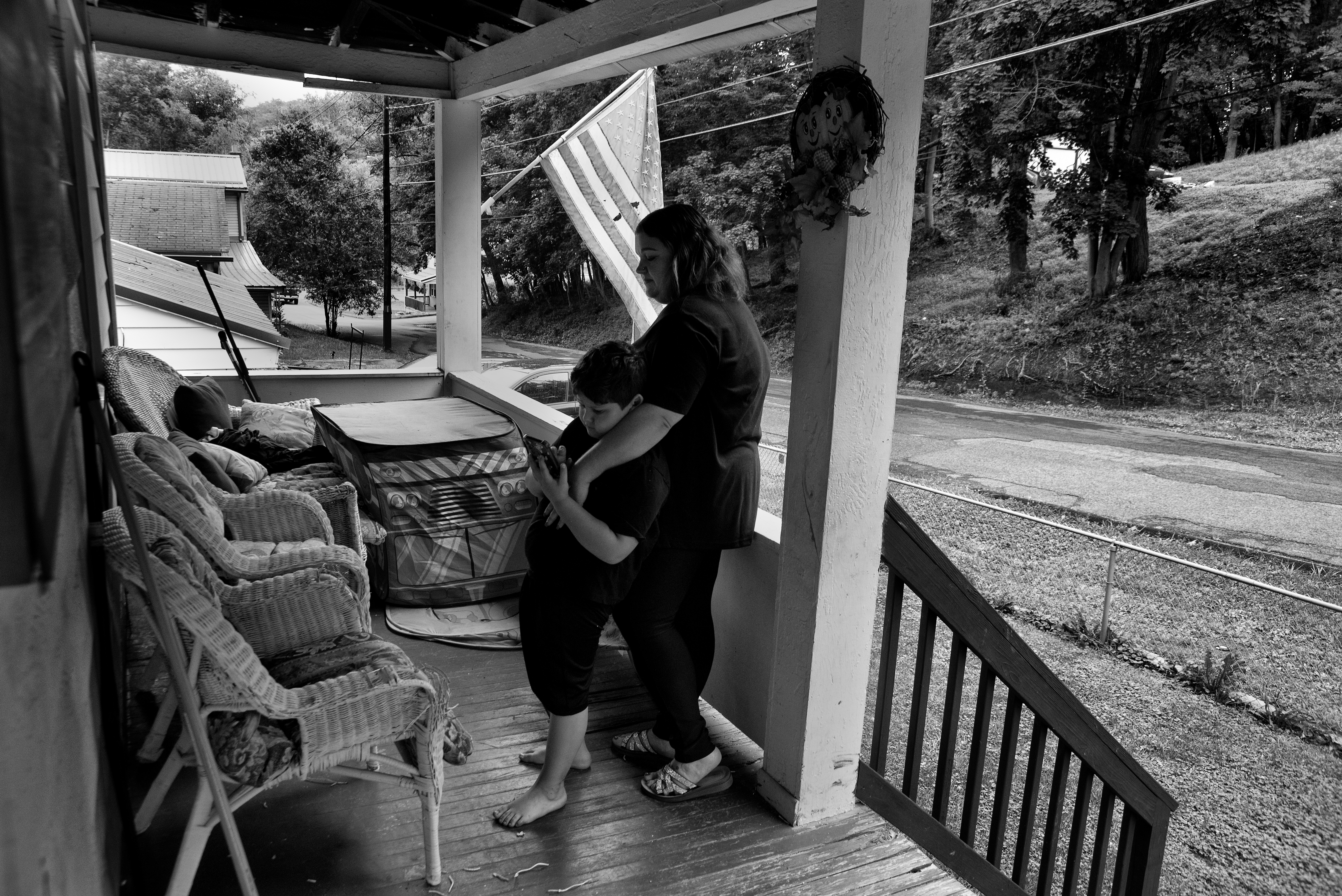
“I’m a US citizen and I have a child. They want us to be left with nothing. So then do we give up? But at this point, we can’t give up. Because they won’t even let him self-deport. They won’t let him sign voluntary departure. They won’t let him do anything.”
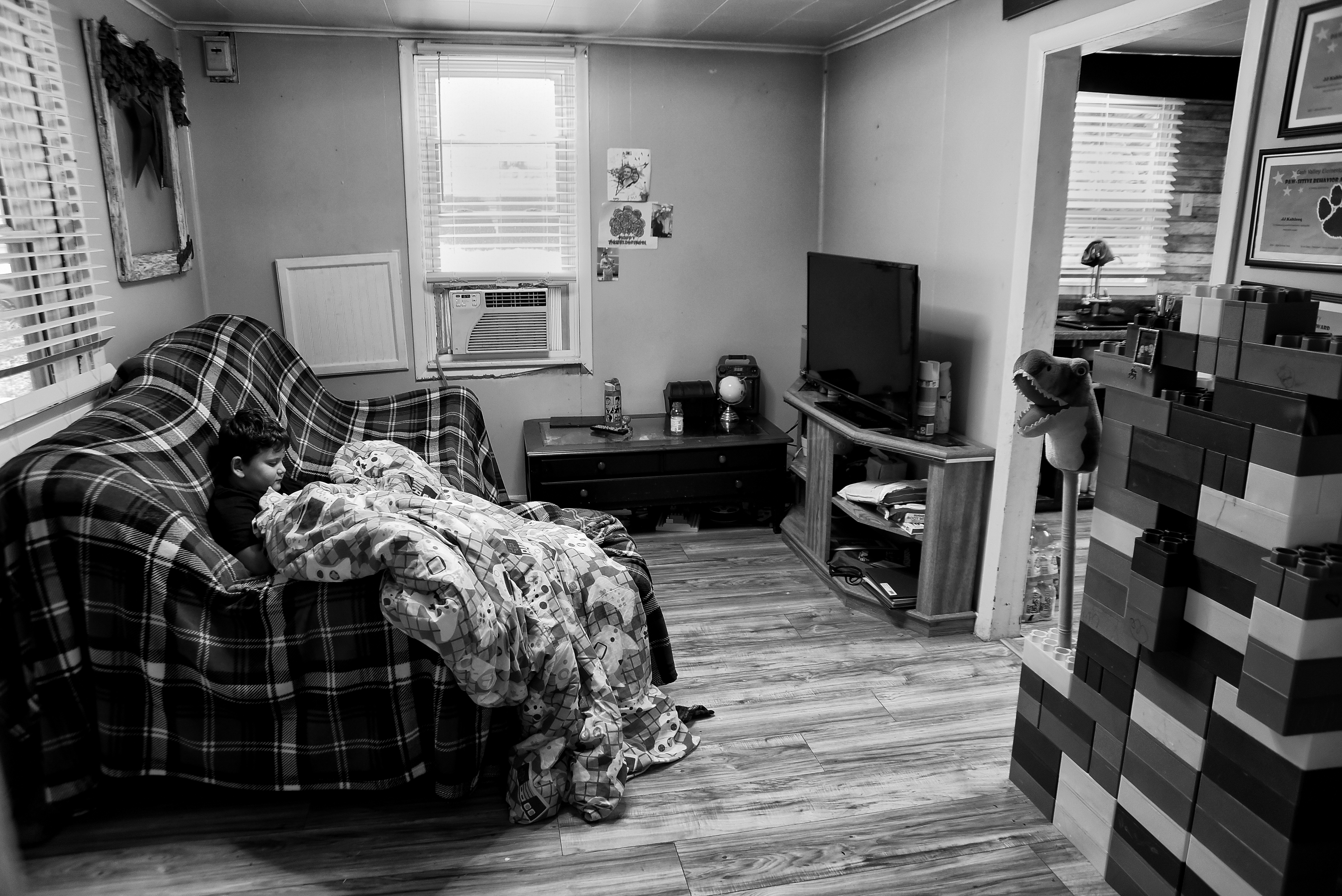

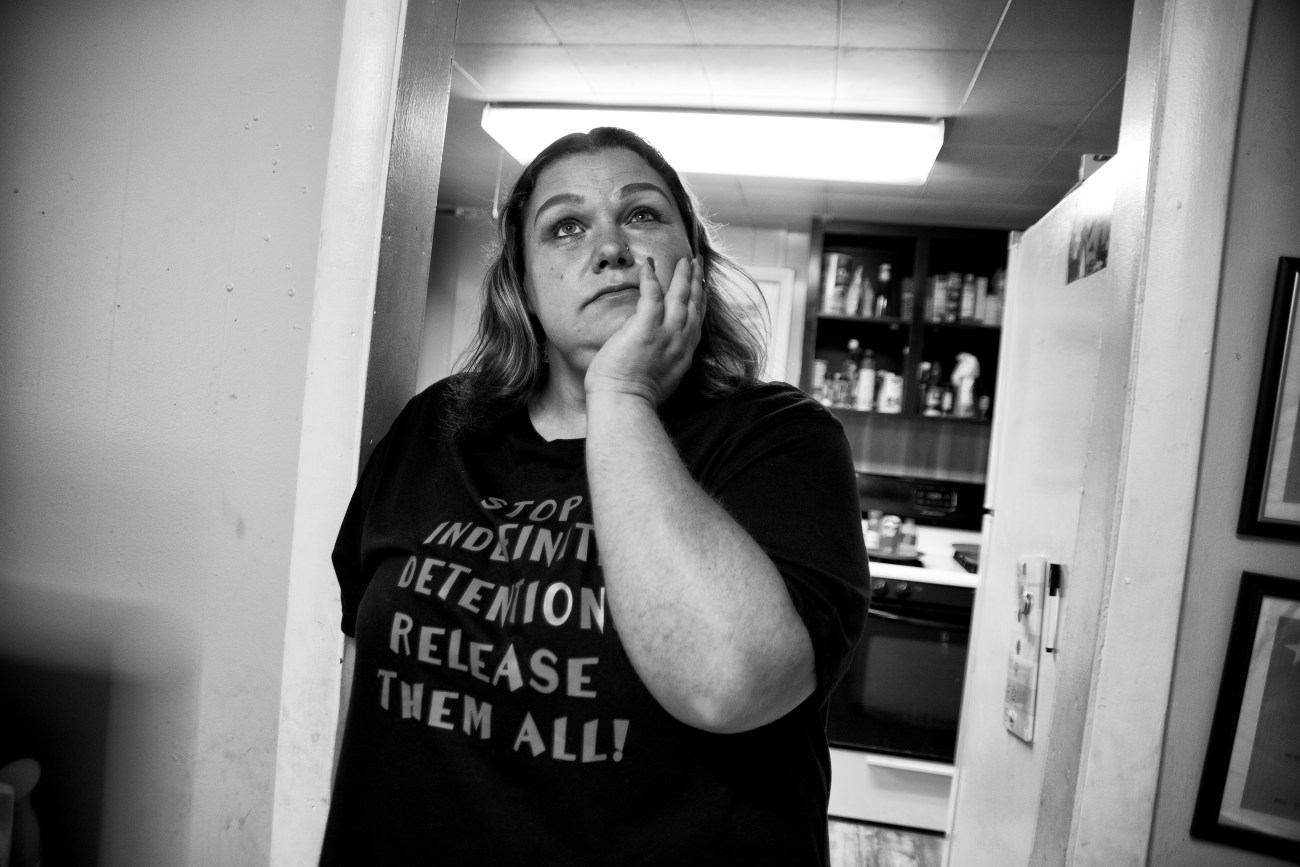
“We went for my child’s birthday. We went for Father’s Day and Mother’s Day. We sit there with him all day wishing we can hug him. But we can’t…We’re trying to get him out and we’re just at a loss. Like, what’s next? What are we going to do?…We just want something other than being locked up. We just want a hug. We just want to move on with answers. That’s all we’re asking, but we still have none of that.”
“Even though the person didn’t pass away, it kind of feels like that. Like he’s been taken away from us. The only thing that’s been helping us is our visits. It’s him being there and seeing him behind the plexiglass. That’s what’s kept us going. If we couldn’t do that, we would be completely lost.”
Elsewhere in the state, networks of trained volunteers accompany immigrants to ICE check-ins, observe courts for ICE waiting outside, and monitor neighborhoods for ICE activity. As Pennsylvania provides no state funding for the defense of immigrants facing detention and deportation, nonprofit legal service providers take on as many clients as possible yet find themselves stretched beyond capacity. Activists and community members attend local government meetings to stop involvement with ICE or end detention.
Kris
Kris, 28, met his partner in mid-2024. Originally from Brazil, his partner fled to the US and was permitted to stay in the country. Immigration officials scheduled his first hearing for 2028. The two fell in love and were legally married in Pennsylvania in December 2025. At a routine ICE check-in, he was detained and transferred to Moshannon Valley Processing Center. Faced with months in detention and deportation, he asked for “voluntary departure.” The judge approved the request, and he voluntarily deported himself to Brazil in the middle of June.
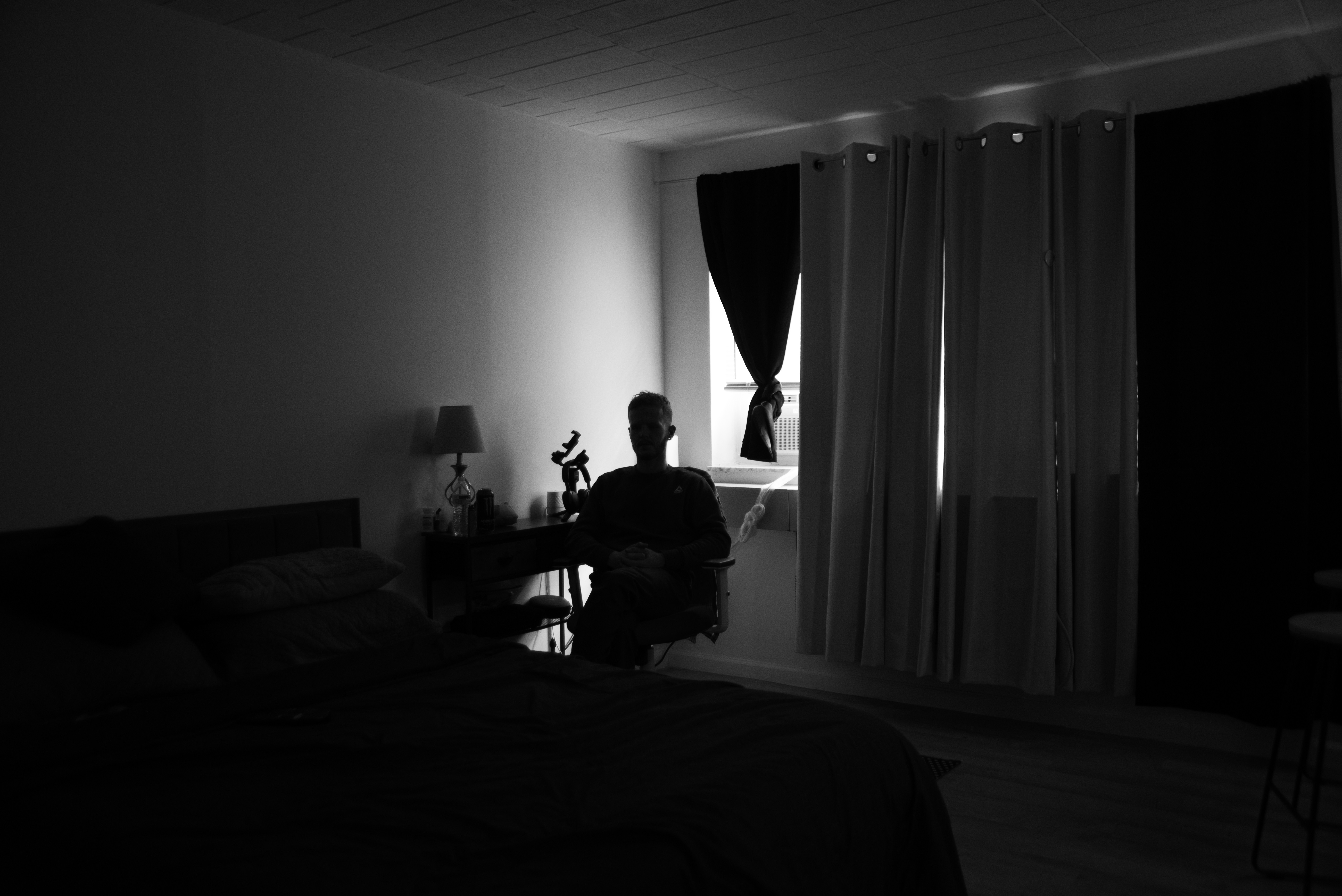
“We provided all of the evidence under the sun,” Kris told me. “Everything you could have with your spouse we had, but nothing was recognized. They only tried to twist it into a fraud. My husband had no criminal charges, nothing wrong, not even a parking ticket, no traffic violations. None of it mattered. I’ve been left with a silence that I wasn’t used to.
“My husband had no criminal charges, nothing wrong, not even a parking ticket, no traffic violations. None of it mattered.”
“Growing up, knowing I was gay before gay marriage was legalized and having that stigma placed upon people who were gay, I felt persecuted at that time. And now I’m encountering another form of persecution; I feel like I can’t marry who I want. I can’t live the life that I’m entitled to have with the person that I love. It’s so dehumanizing. It’s like he’s less-than. I feel persecuted for loving an immigrant and marrying an immigrant. ‘Oh, you married an immigrant? This is what you deserve.’”
Eastern Europe
This woman’s husband has been detained in Moshannon Valley Processing Center for five months. She’s a US citizen. Her husband was born in Eastern Europe and settled in the United States in 2023. He received a work permit, had been through USCIS biometric processing, and was issued an ID. In early 2026, while working as a delivery driver in Nassau County, he was pulled over for a broken headlight. He was arrested and then released. When released, ICE arrested and placed him in detention. He found out his lawyer had never filed his asylum paperwork with the courts. He had no criminal record.

“Initially he was hopeful he would get out. Then he started getting angry, especially when they put him in solitary confinement. He couldn’t understand what was happening. They put him on major depression medication, but he started losing his emotions. I wasn’t sure if he was at risk of suicide, because I knew how he was changing. It’s like watching somebody die in front of you for a prolonged period of time.”
“I think for the majority of the detained, there’s at least two people on the outside who are fighting for them, struggling. There’s a lot of people who are unseen. You can count the number of detained individuals in ICE facilities, but you can’t really count the number of people affected.
After we met, her husband was transferred to detention centers in Louisiana and Texas. In late July he was deported on a series of flights to his country of birth.”
Father and Son Detained
At the age of fourteen, this young man and his family arrived at the US border, immediately applied for asylum, and followed all US immigration and asylum policies and procedures. In early 2026, just after his eighteenth birthday, ICE asked him and his father to appear early for their immigration-check in. When they arrived, ICE detained both of them “due to available bed space.” Within days, ICE separated the two. The young man was transferred to Moshannon Valley Processing Center.
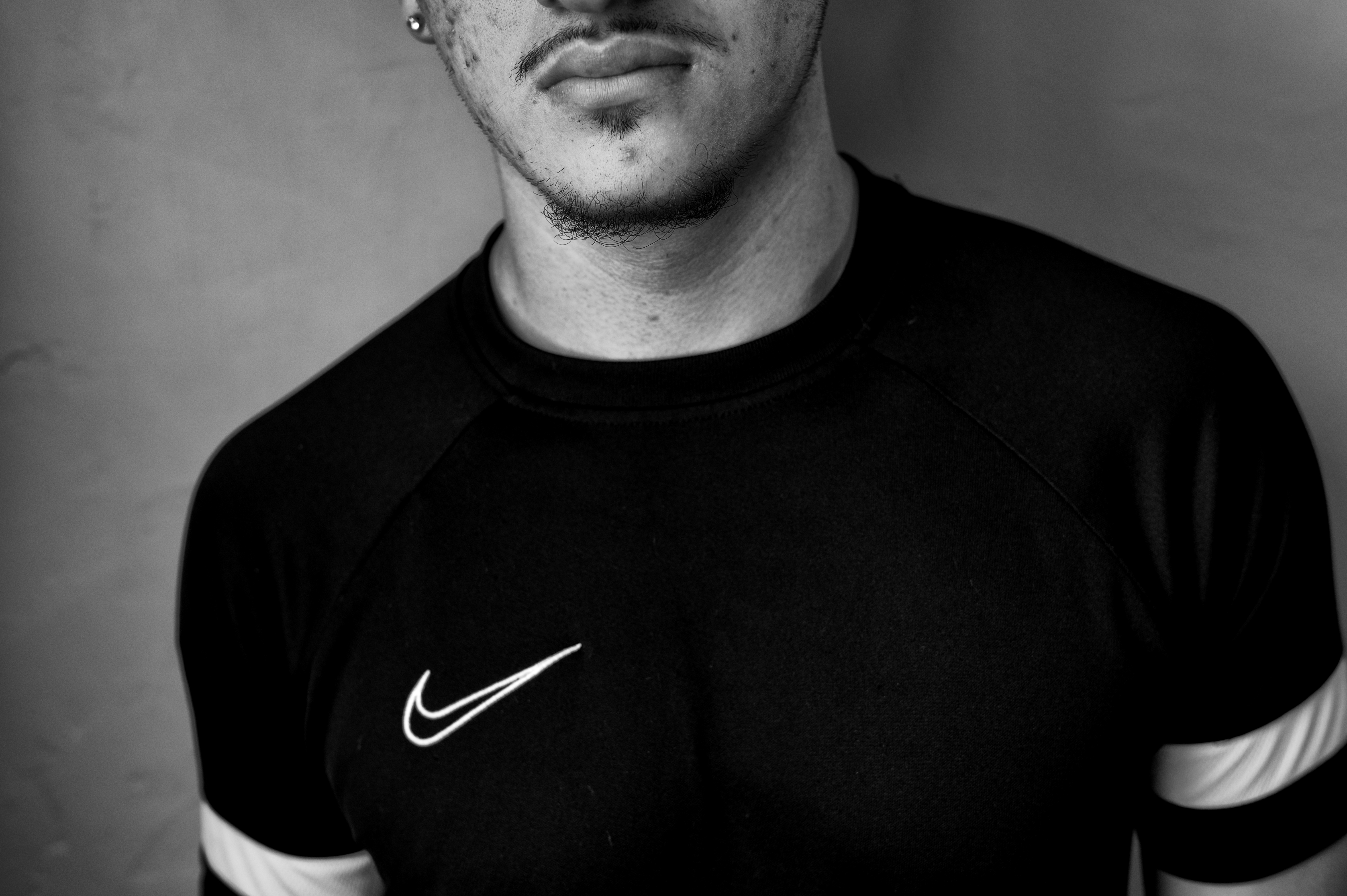

After two months in detention in Moshannon and weeks of lawyers tirelessly working and battling his case through the immigration court system, an immigration judge evaluated the actual merits of his asylum claim, and granted him asylum. As a result, he was immediately released. The father, 35, and his son, 18, sit together in their home.
“You could never be calm in there.”
“I didn’t think they could arrest me for just being there,” he said of the ICE appointment. “The second day I was in Moshannon, I got a bloody nose—and I would get bloody noses often. I think it was the stress, my fear, or worrying about what was going to happen. I’d never done anything wrong and I felt undignified. There were a lot of older adults and I didn’t know any of them, so I was very scared because I was the youngest person there. There was a lot of stress and a lot of fighting. There were people who had been in there for years and others who were there for one or two days and then deported. You could never be calm in there.”
John Streno, Mayor
“It’s always been important to the community. It’s never been a big problem. It’s only been a positive for us in this town,” Mayor John Streno said to me as we sat on the front porch of his home in Philipsburg.
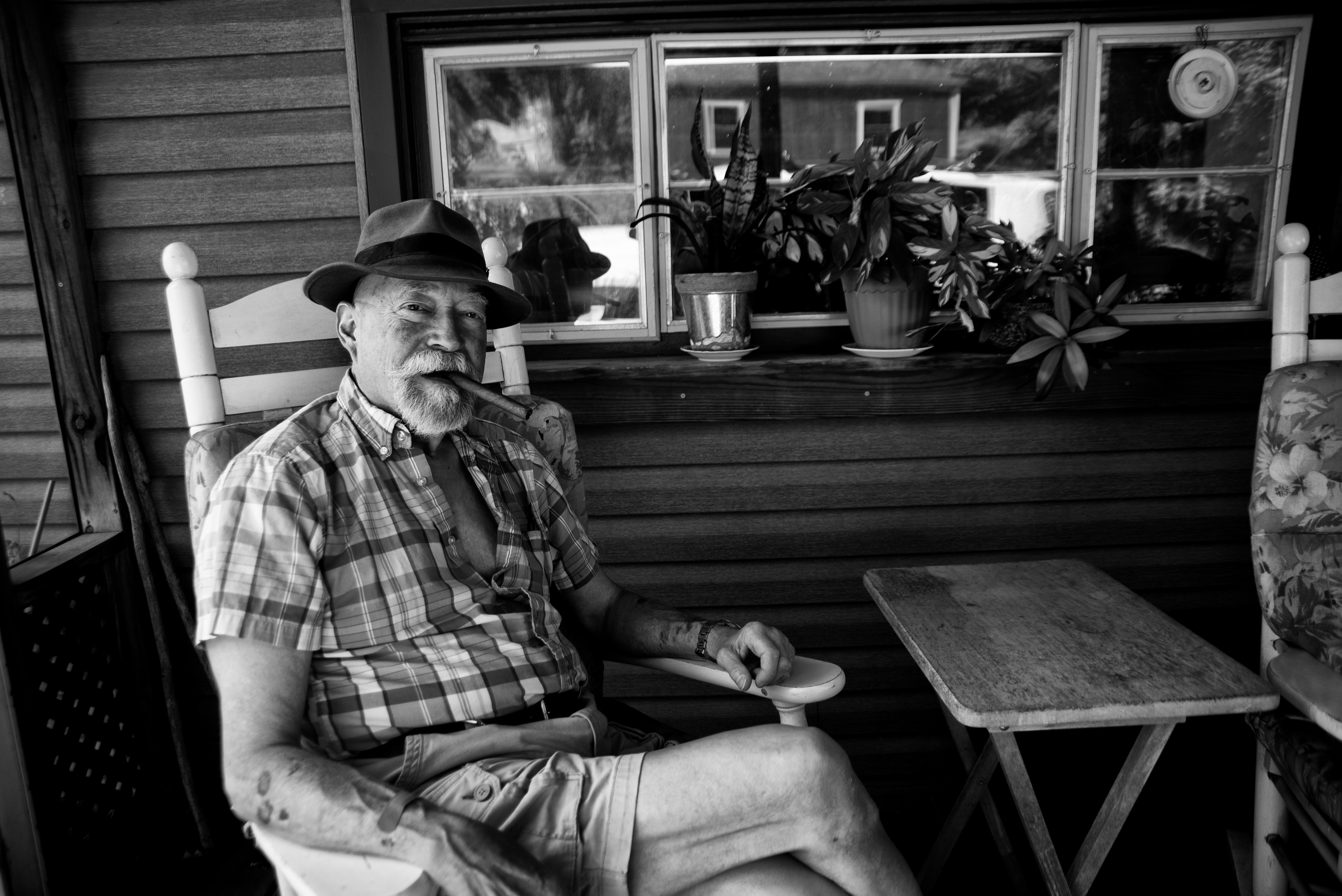
When describing Moshannon Valley Processing Center as an ICE facility, the mayor said, “To me, in a way, it’s no different than a cemetery. It’s a place where people come and end up and you never see them again. They come to the prison, they end up there, and then they go away.”
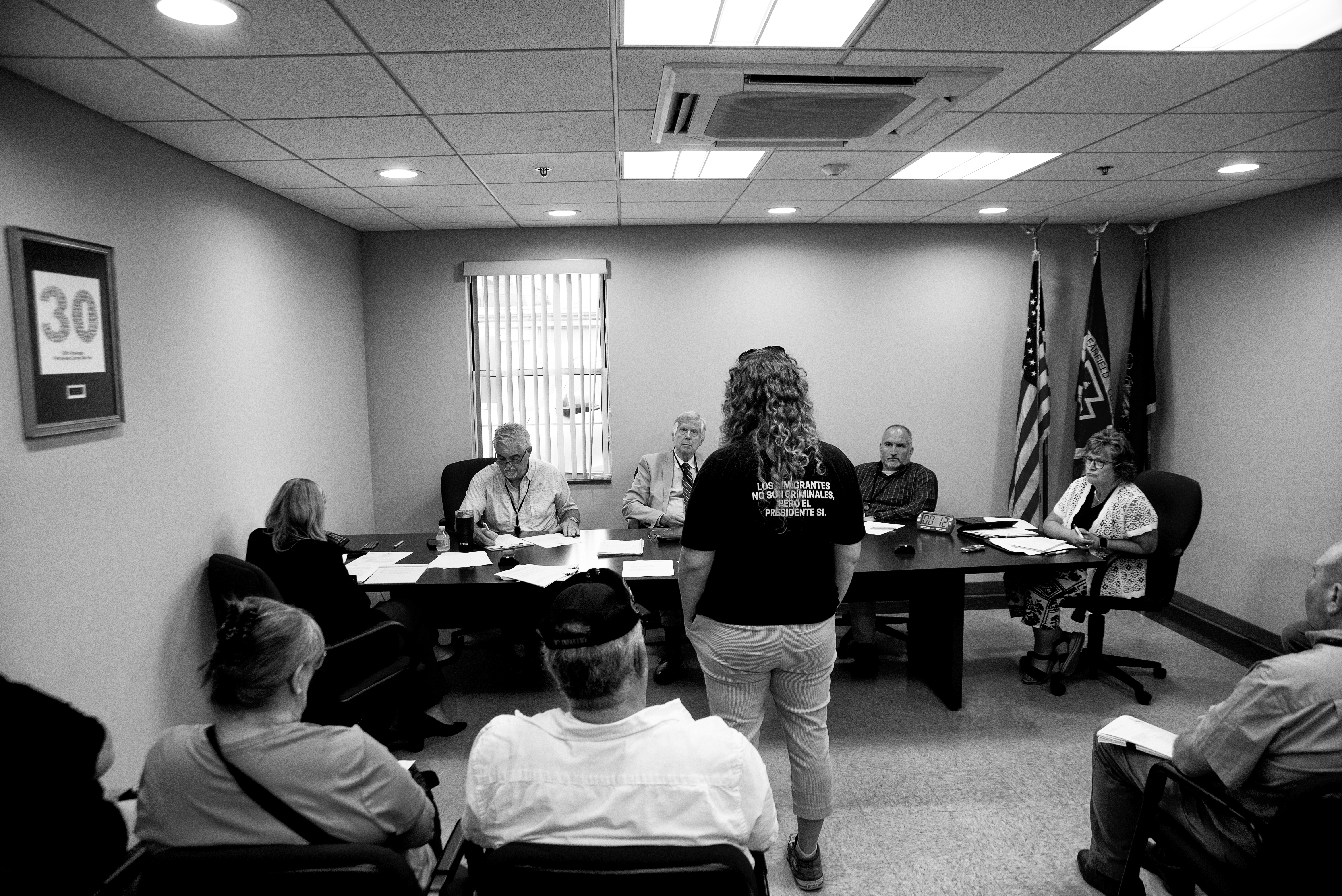
Community members, including Bobbi Erickson, provide comments on why the current 5-year contract between the county and GEO should not be renewed: “I come here today with a broken heart. My plan for today was to have somebody from Moshannon call and give his testimony and his words to you. Last night he told me he was too scared to do so, that he was afraid his case would be impacted, that he would be taken away from his family and he would lose his home. He was scared to speak about his experiences. You don’t hear the stories inside this facility because it’s run-on fear. People inside ask me, ‘Why am I here?’ The only thing I can ever tell them is, for profit, and because the men in charge won’t listen to their stories.”
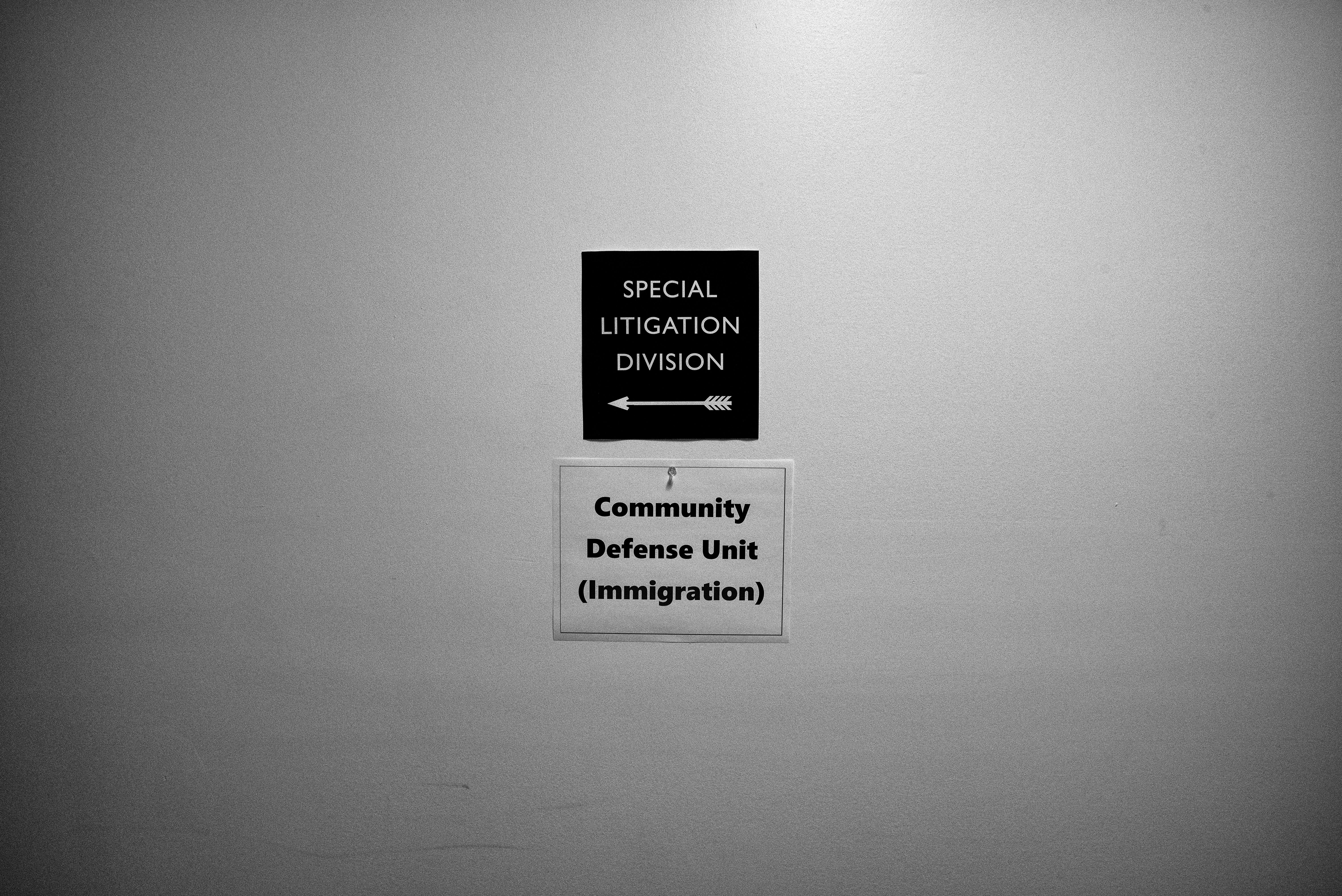
The state of Pennsylvania does not provide any sustained funding to legal service providers. The state ranks fourth in the number of habeas corpus petitions filed by immigrants since the beginning of Trump’s second term. Since December of 2025, habeas petitions filed by the Defender Association of Philadelphia have resulted in the release of 303 people—but demand for their services is three times more than they have the capacity to provide.
“In January 2025, they just started detaining everyone for non-criminal reasons. Regular asylum seekers living their lives, contributing to their community, not doing anything wrong,” Lilah Thompson, chief of immigration for the community unit at the Defender Association of Philadelphia, said to me. “Detention numbers just shot up. There are all these ways in which ICE began ramping up detention, stripping people of rights and status or pending status—detaining people that have no business being in detention, because nothing had changed in their situation to warrant it. ICE is just churning bodies into the detention system.”
Legal Support
“My client is a gentleman who is married to a US citizen. He was on his pathway to citizenship. He was literally one month away from getting his green card when he was detained by ICE, completely unjustly, no warrant whatsoever. He was moved to Moshannon, but thankfully we got him moved back to the Federal Detention Center in Philadelphia. I was prepared to not really lose this case, but try to encourage my client to stay in detention for the six or eight months needed to wait out his appeal. I kind of sent this lawsuit against the court as a Hail Mary, just to show that we did everything we could do. And the fact that not only did we get the decision we wanted, but also got it pretty quickly to me, it’s a blessing and a miracle.”
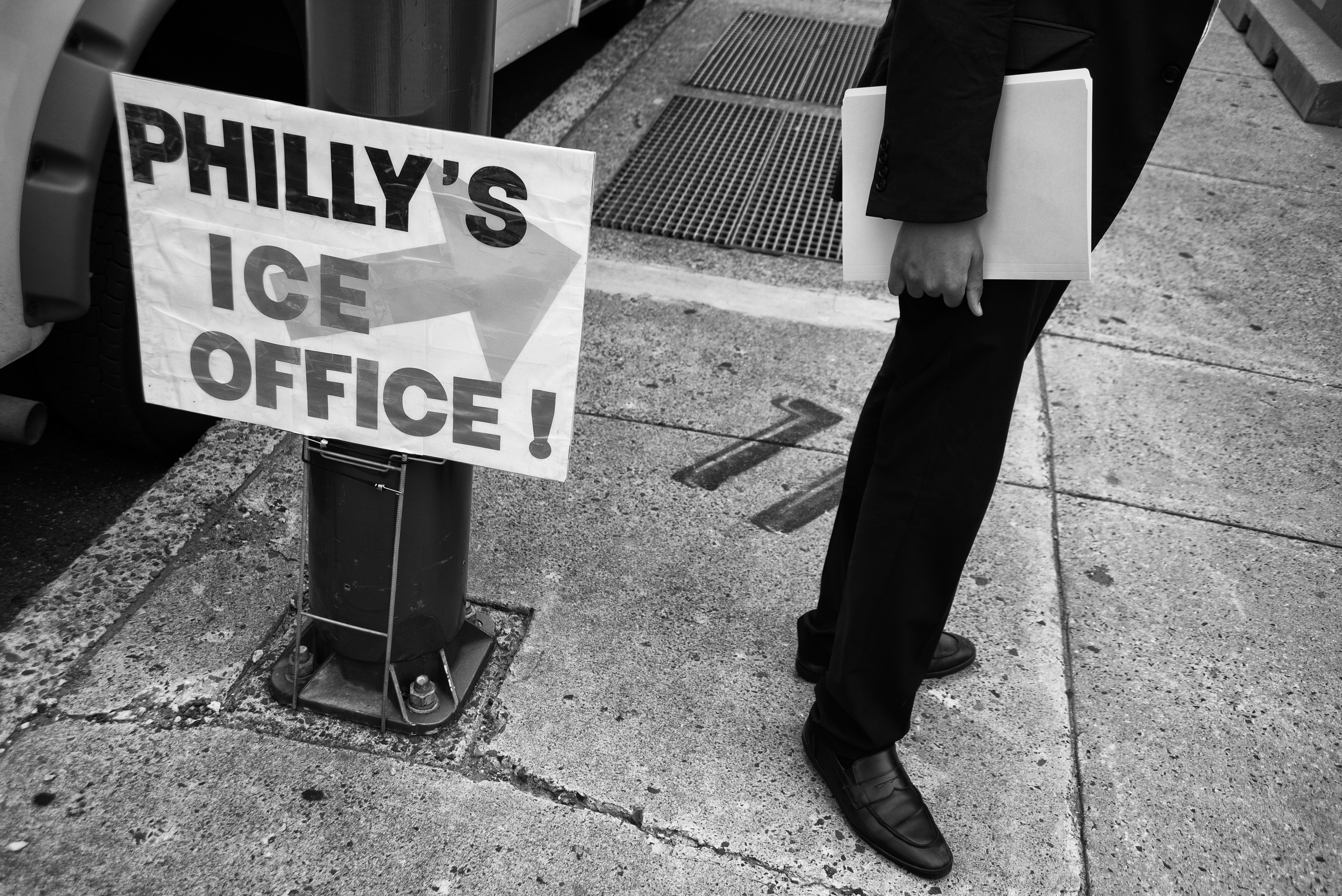
The Witnesses
Moments before the photo below was taken, in Evans City in Butler County north of Pittsburgh, local police and ICE pulled over the driver for a broken taillight. He was a 23-year-old man from Ecuador who worked laying carpets; he showed his ID but was arrested and detained by ICE. “I told them he has a work permit but he didn’t have it on him,” said his co-worker, who was sitting in the passenger seat when the arrest happened. “They arrested him anyway.”

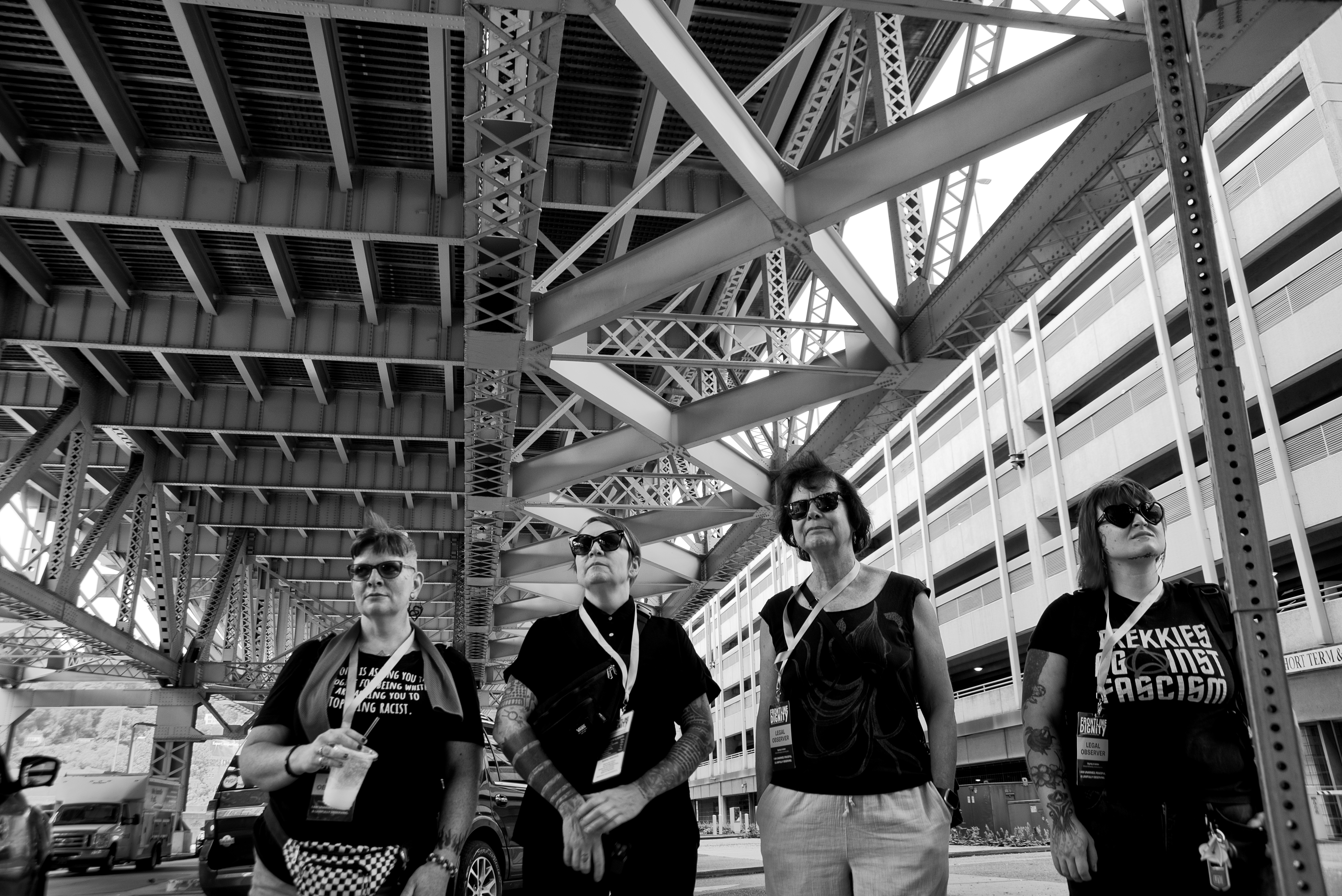
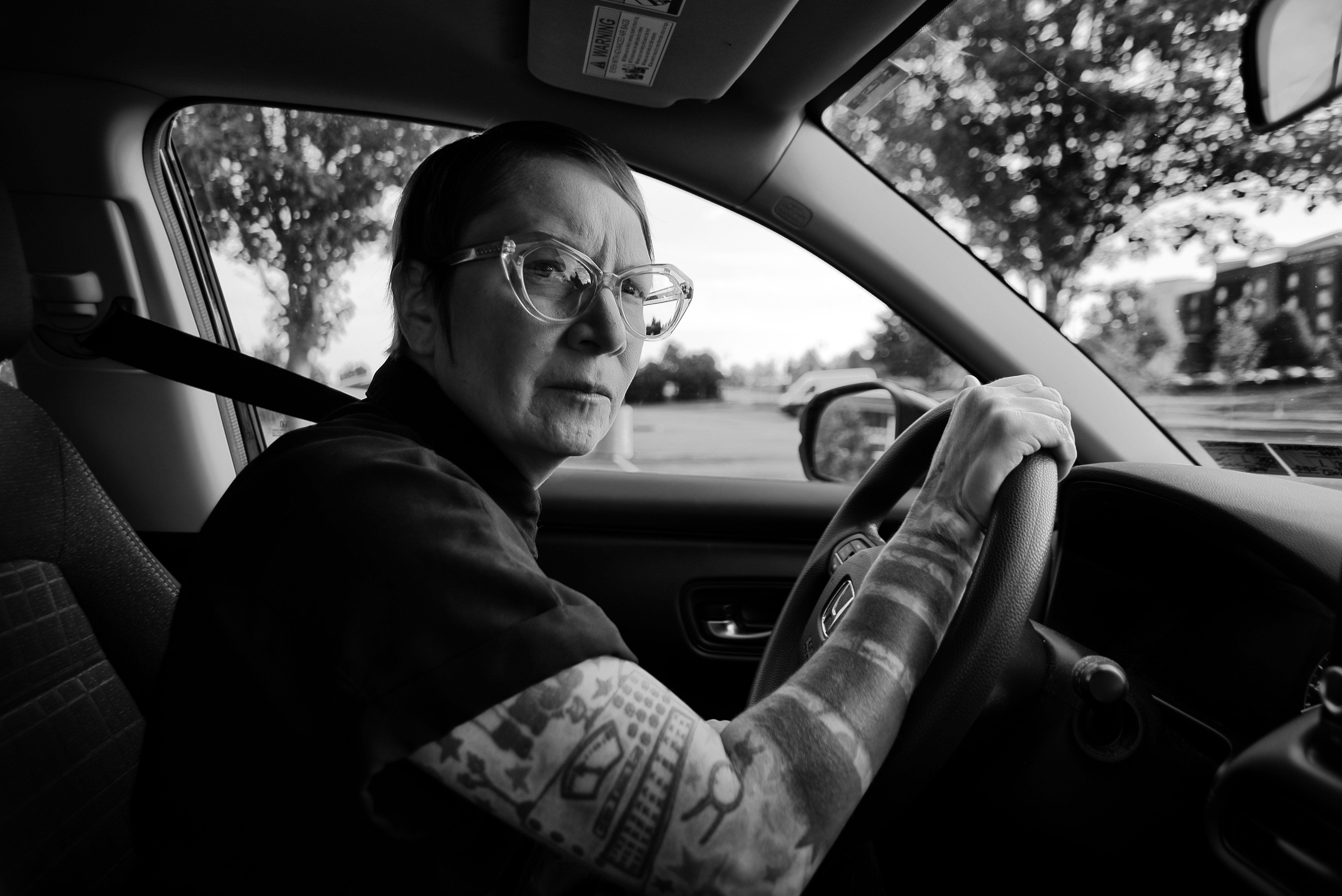
“It’s devastating what’s been going on in Pittsburgh for the last year and a half,” Jenny says. “And it feels so incredibly heavy and dark, and it feels like everything escalated so quickly. Showing up and making sure we’re there to observe and help seems like the only hopeful thing to do at this point, to try to help everybody through what’s going on. It’s sad and it’s devastating.”
In Philipsburg, organizers and activists canvas the town, educate residents and ask for their support and signatures on a petition to push the three county commissioners to not renew the management agreement with GEO Group.
“I think they should ship all of them motherfuckers back to wherever they came from and then all of you Democrats should go and follow them,” a man says to one canvasser.
“That’s very American of you,” the canvasser politely replies.
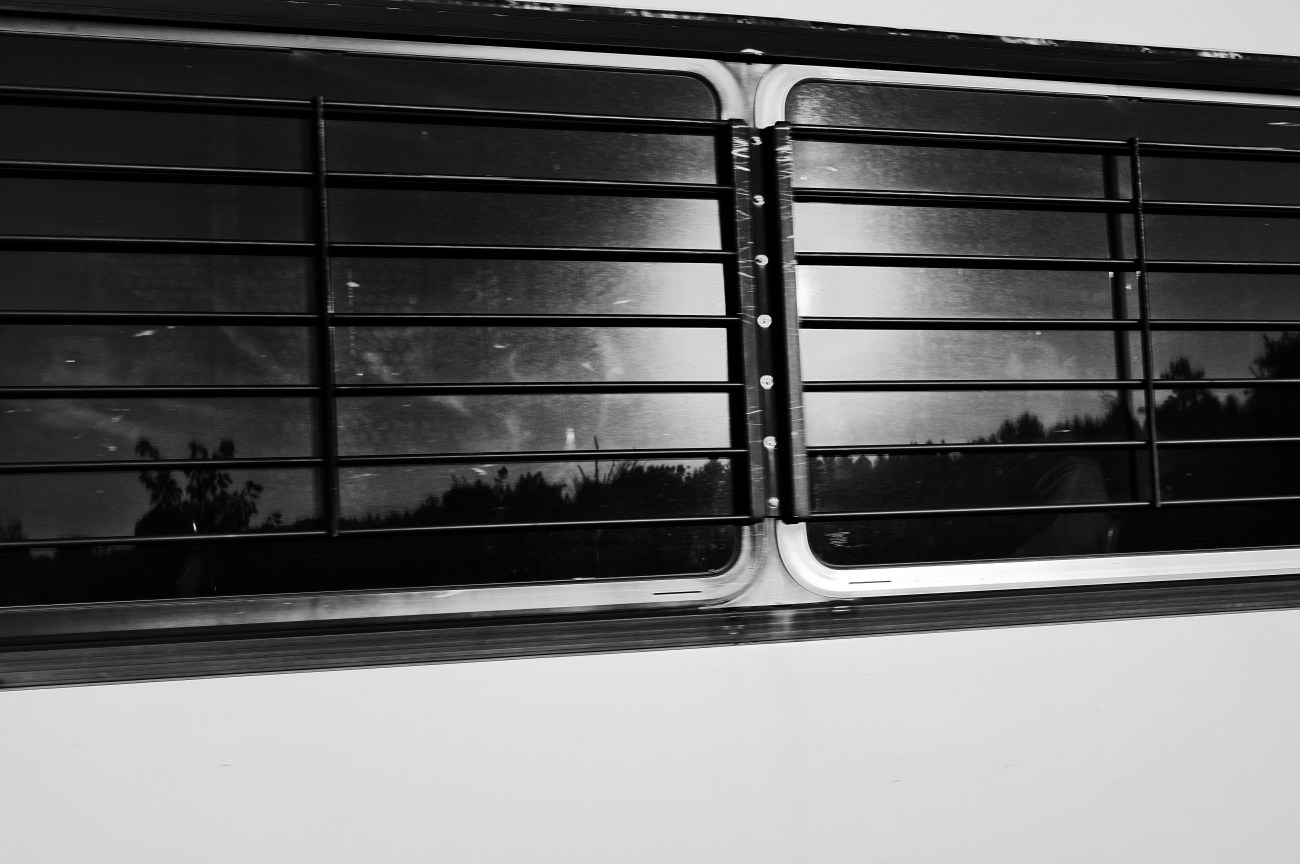
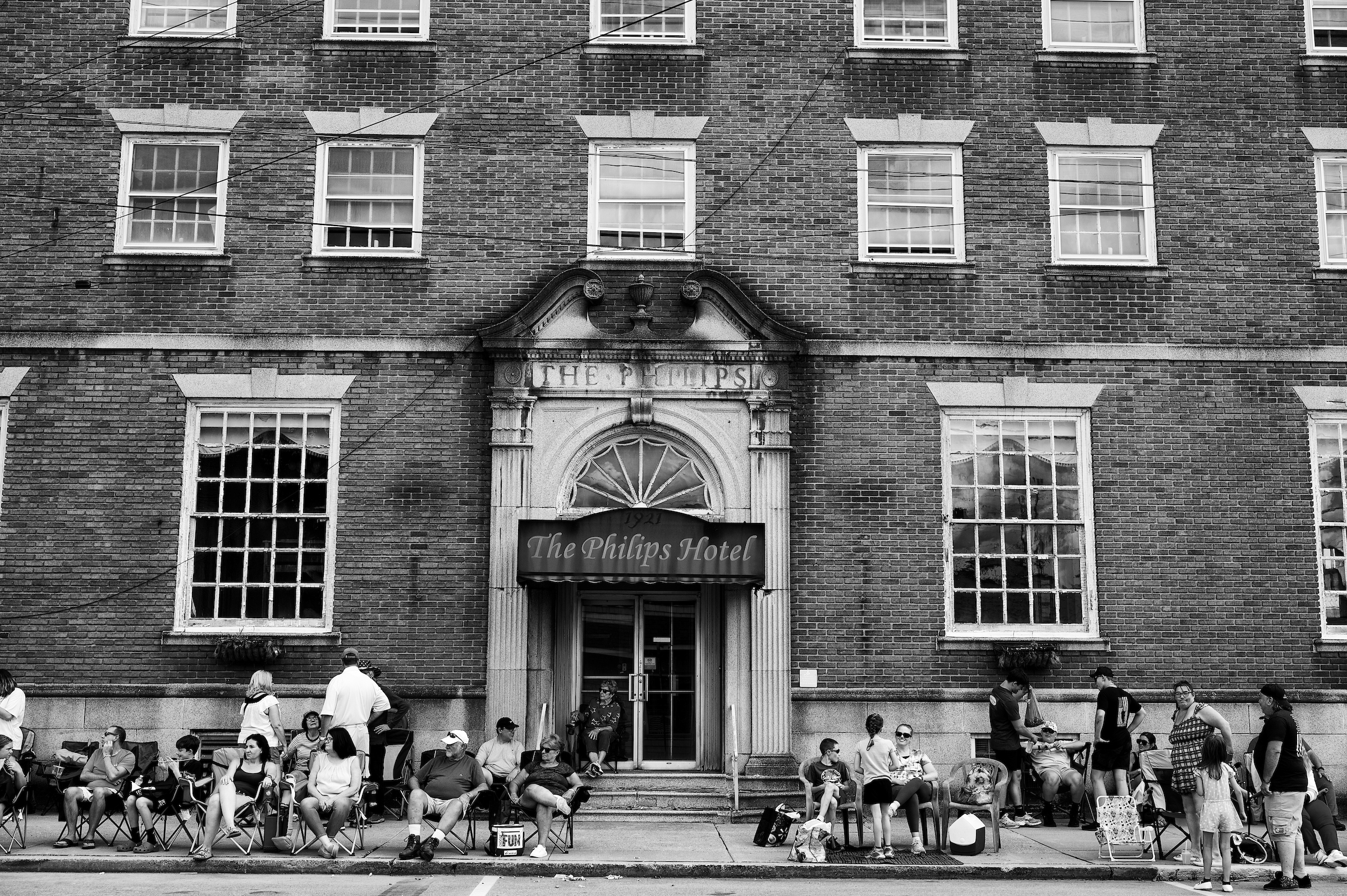
It’s Saturday, July 11. Several thousand people sit in folding chairs along Presqueisle Street in downtown Philipsburg. They wait for the 2026 Heritage Days Festival parade to start. The theme this year is “Let Freedom Ring.” I walk the length of Presqueisle Street, randomly asking people for their feelings about detaining immigrants at Moshannon. One woman says she has friends who were recently hired there and now make $30 an hour.
“I have no problem with those illegals being put up there,” her husband adds.
Another man says jobs and money are the only things that matter, while another says, “Those people detained there bring money to the town.”
A woman talks with me in a whisper away from her family.

“To treat people like they are all criminals and animals, that’s where I have to draw the line. It’s morally wrong,” she says.
“All the years I’ve lived in this town, I’ve never heard too much about that facility until ICE took it over. Until people from ICE went in there,” a woman shared with me as she sat with family on their porch on Presqueisle Street. “For a long time I didn’t realize it was an ICE facility. And I didn’t even know what the difference was. I don’t really agree with the whole way the immigrant thing’s being handled. I think they’re taking people they don’t need to take. They’re not taking the worst of the worst, you know? They’re taking anybody. But here and the way I feel, we’re the minority.”
“They’re not taking the worst of the worst, you know? They’re taking anybody.”
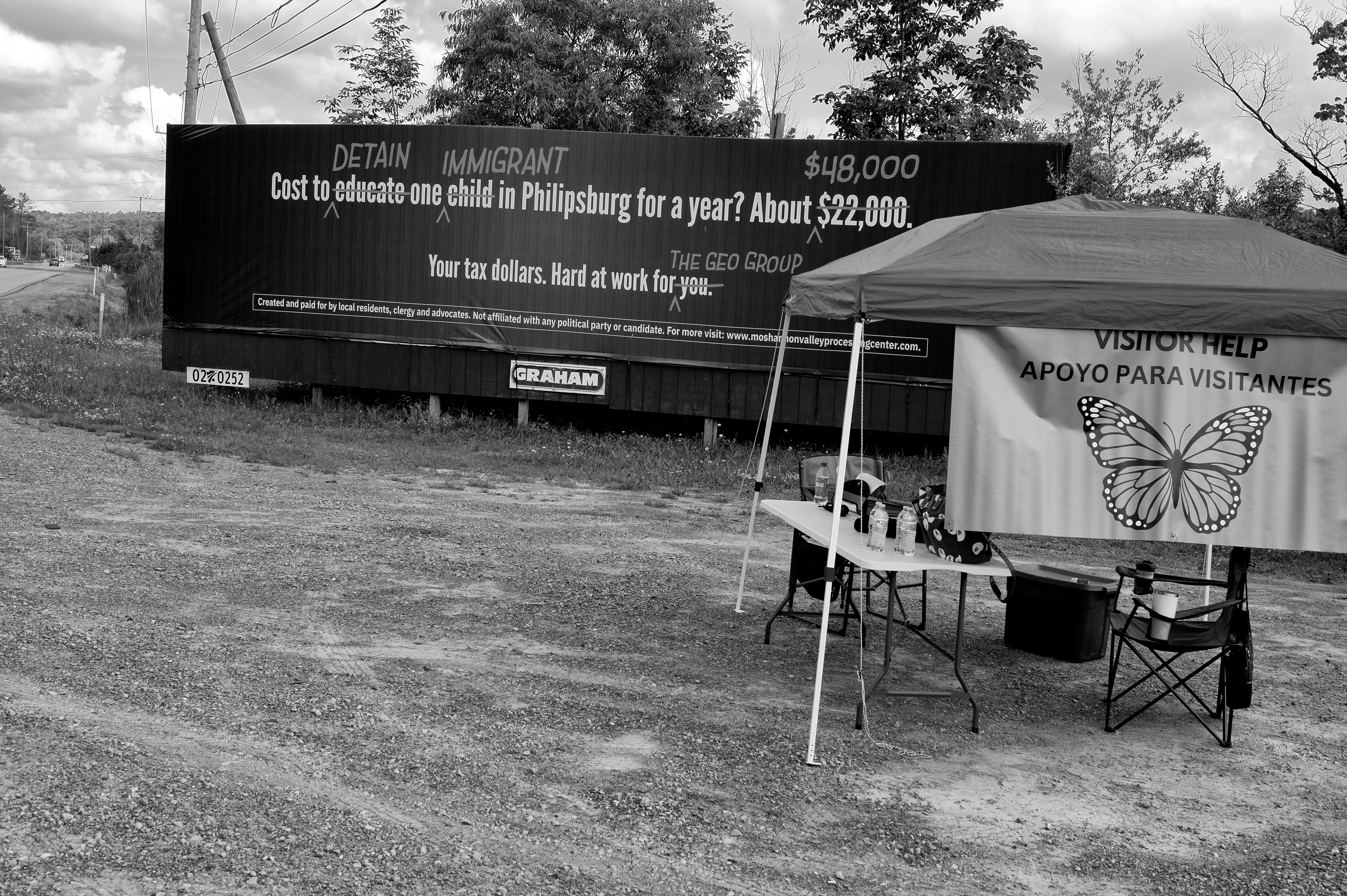
On this same Saturday, on Route 322 at the opposite end of Philipsburg, volunteers set up a canopy and table on a corner of a small road that leads up to Moshannon Vallery Processing Center. They provide information and resources to families who have driven hours to visit loved ones. Families have come from New York, New Jersey, Maryland and other parts of Pennsylvania. “We have no idea what’s going to happen to him,” a man says of his son-in-law. “It’s been so painful on his mother.” He and the young man’s mother drove four hours from New York to visit him.
Visiting Moshannon
For entry, GEO requires visitors to adhere to strict dress code rules. That day, two parents drove four hours from New York to visit their son who had already been detained for three months. Unaware GEO does not permit entrance to female visitors with metal supports in their bras, the mother used the tent to change into a new bra, part of a collection of free clothing available to visitors.
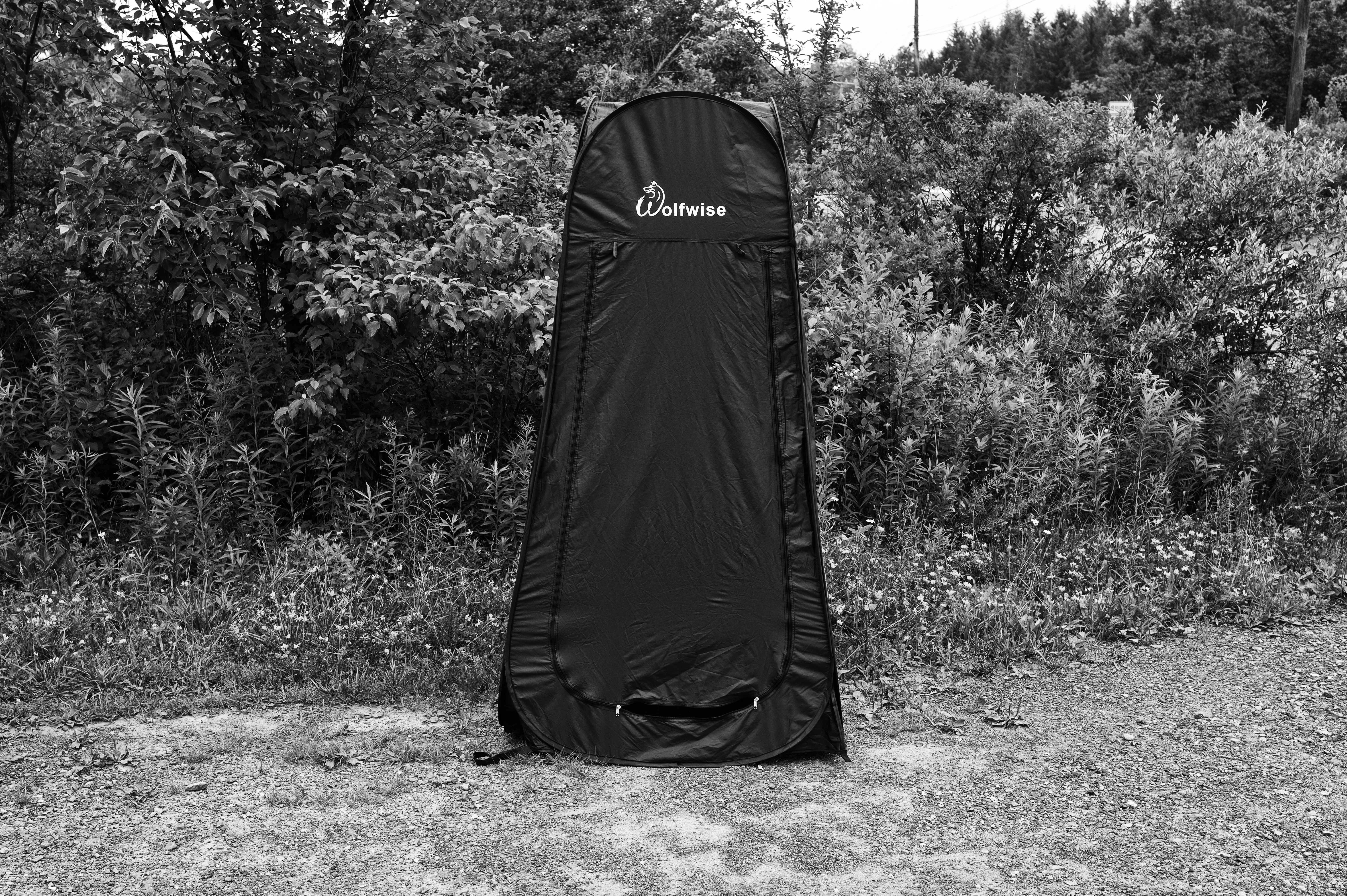


This man, a US citizen, drove four hours from Maryland to visit his brother who has been detained in MVPC for over a month. His brother has lived in the US for 26 years. GEO Group employees denied his visitation, citing his open-toed shoes, which they said did not adhere to dress code rules. He drove to a nearby Dollar General and bought a pair of sneakers, then returned.
“He was pulled over while driving home from work, arrested and put here. He’s never done anything wrong.,” he said. “It’s my third visit. What’s happening is crazy. It’s like they took a plate of spaghetti and threw it against the wall to see what sticks. That’s what happened to my brother.”
Behind them and their SUV parked on the corner, a large roadside billboard funded by several activist groups provides a backdrop to the efforts of the volunteers and the stories of the five other families that stop to ask questions. The billboard compares the costs to detain one immigrant in Moshannon Valley Processing Center for a year versus the cost to educate one child in Philipsburg, and asks who benefits from the detentions. It’s not only a parting message to everyone as they leave Philipsburg on 322, but also a harsh reminder of the yard sign, and Lady Liberty’s somber greeting to visitors, a few miles back.
Greg Constantine produced this work, the third in a series documenting immigration detention and its wider impact in Oklahoma, Indiana, and Pennsylvania, as part of the 2026 Bertha Challenge Fellowship.
 Mother Jones is a nonprofit American progressive magazine that focuses on news, commentary, and investigative journalism on topics including politics, environment, human rights, health, healthcare and culture. Clara Jeffery serves as editor-in-chief of the magazine. Monika Bauerlein has been the CEO since 2015.
Last updated from
Mother Jones is a nonprofit American progressive magazine that focuses on news, commentary, and investigative journalism on topics including politics, environment, human rights, health, healthcare and culture. Clara Jeffery serves as editor-in-chief of the magazine. Monika Bauerlein has been the CEO since 2015.
Last updated from