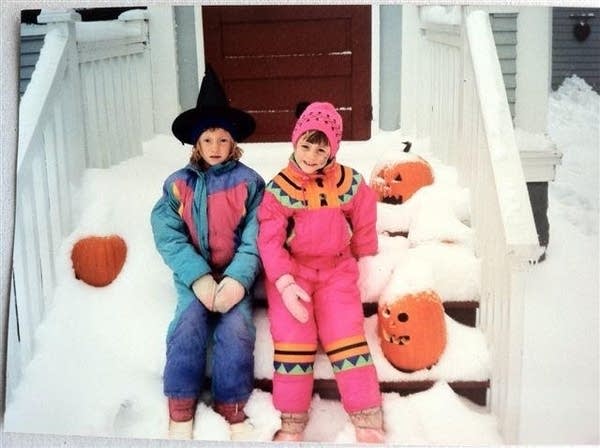
It’s been 35 years since Minnesota was hit by one of the most memorable weather events in state history.
The Halloween Blizzard of 1991 blanketed parts of the state with up to three feet of snow. MPR News meteorologist Sean Potter set out to learn what made that storm so powerful and whether something similar could strike Minnesota again.
Looking back at the Halloween Blizzard
“Well, a real winter storm is moving through the area this afternoon. The National Weather Service has now issued a winter storm warning, which will remain in effect tonight through tomorrow night for much of southern and eastern Minnesota, and winter weather advisories are in effect tonight for parts of northwestern and extreme southeastern Minnesota.”
That’s MPR’s Gary Eichten back on Halloween 1991, describing what would become one of heaviest and longest-lasting snowstorms in Minnesota history.
The Halloween Blizzard ranks as the third most significant Minnesota weather event of the 20th century. At the time, MPR spoke with Robert Sorlie, an Albert Lea resident.
”It's like a war zone,” Sorlie said. “And everything is ice coated. And some of the trees won't make it. And the neighbors have a mess all around us. the city of Albert Lea is still without electricity in places.”
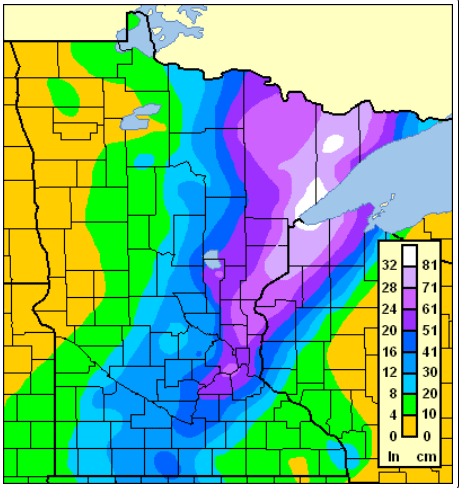
The storm dumped more than 28 inches of snow on the Twin Cities and nearly 37 inches on Duluth. Strong winds of up to 60 mph caused major snow drifts and widespread power outages. At least 20 people died as a result of the storm.
Forecasters knew the storm was coming—but the unusual intensity of the storm along with less sophisticated tools than we have today—didn’t allow them to see its significance ahead of time.
Kenny Blumenfeld is a senior climatologist with the Minnesota State Climatology Office.
“It ended up exploding into a very powerful low-pressure system, and I don’t think that had been anticipated. With that, they underestimated the intensity of the precipitation. Even though forecasters were generally right that it was going to be a wet, sloppy storm and there was going to be some snow, they may be missed the historic nature of what was happening.”
Did El Niño help fuel the storm?
One other factor may have helped fuel the Halloween blizzard—El Niño. That’s the climate phenomenon that occurs when ocean waters in the tropical Pacific become unusually warm. It can affect weather patterns across the globe—including how moisture moves through the atmosphere.

Blumenfeld says—to some extent—some of that moisture feeding the Halloween blizzard came from the unusually warm Pacific Ocean.
“But you can look at the origin of the storm system—the low-pressure system that caused the Halloween blizzard—and actually see a line between it and that pool of rich, subtropical moisture being generated by El Niño. In that way, you could at least make the case that elements of the Halloween blizzard—its large quantity of moisture, for example—could indeed be attributable to that El Niño event.“
That’s not to say El Niño caused the blizzard. But it could have helped bring the moisture that made it such an extraordinary storm.
Could another Halloween Blizzard happen?
But with another El Niño developing this winter – could Minnesota see a similar storm?
While strong El Niños are often associated with warmer, less snowy winters in Minnesota—Blumenfeld says climate change is increasing the amount of moisture available to fuel storms—creating the opportunity for heavy precipitation when conditions are right.
“I don’t think storms like the Halloween Blizzard are entirely things of the past. The evidence is pretty strong that our snowstorms are tending to produce more snow than they used to, and they’re tending to come with more precipitation. That’s because there’s more water vapor available in the global climate system, so there’s more precipitation potential with any precipitating weather system.“
Blumenfeld says a storm of that magnitude is still possible. In Fact, near the end of March 2024—during an El Niño—another major snowstorm dropped a foot of snow to the Twin Cities, 16 inches near St. Cloud and more than 20 inches along the higher terrain between Duluth and Two Harbors.
But getting that much snow on Halloween—that's what makes the 1991 event truly remarkable.
Collected from Minnesota Public Radio News. View original source here.
 Minnesota Public Radio (MPR) is a public radio network for the US state of Minnesota. With its three services, MPR News, YourClassical MPR and The Current, MPR operates a 46-station regional radio network in the upper Midwest.
Last updated from